
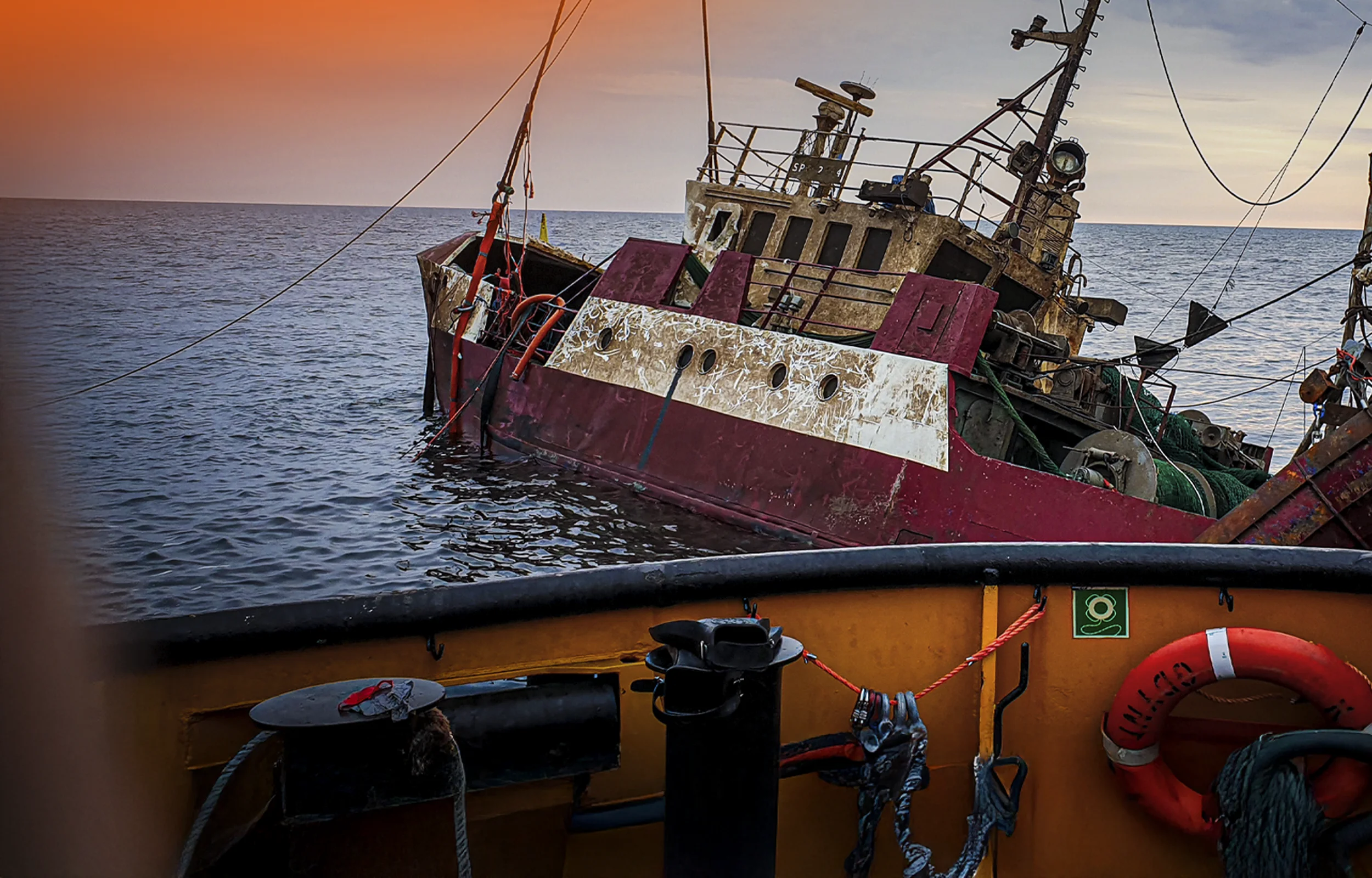
Ship salvage operations require precision. In this blog, you can read about how salvage operations are carried out and how divers ensure safe execution underwater.
What is ship salvage?
Ship salvage is the controlled and safe recovery, relocation or removal of a sunken or damaged vessel. It is carried out when a vessel poses a risk to maritime traffic, could cause damage to infrastructure, or presents a hazard due to leaks or instability.
The aim is to make the situation safe, prevent further damage and restore access to the waterway. This applies to pleasure craft, inland waterway vessels, workboats and larger vessels. While the scale may vary, the salvage process always requires experience, precision and teamwork.
When is ship salvage necessary?
A vessel does not need to be completely sunk for salvage to be necessary. Often, it involves vessels that are taking on water, have capsized, are aground or are blocking a navigational route.
After a collision, or where there is a risk of fuel or cargo leakage, swift action must be taken to minimise environmental and safety risks. In every case, the safety of people, the environment and the surrounding area is paramount.
The salvage process: a step-by-step guide to ship salvage
Although every situation is unique, professional ship salvage operations usually follow a set procedure. This step-by-step guide to ship salvage provides a structured approach and ensures safety.
1. Situation analysis and underwater inspection
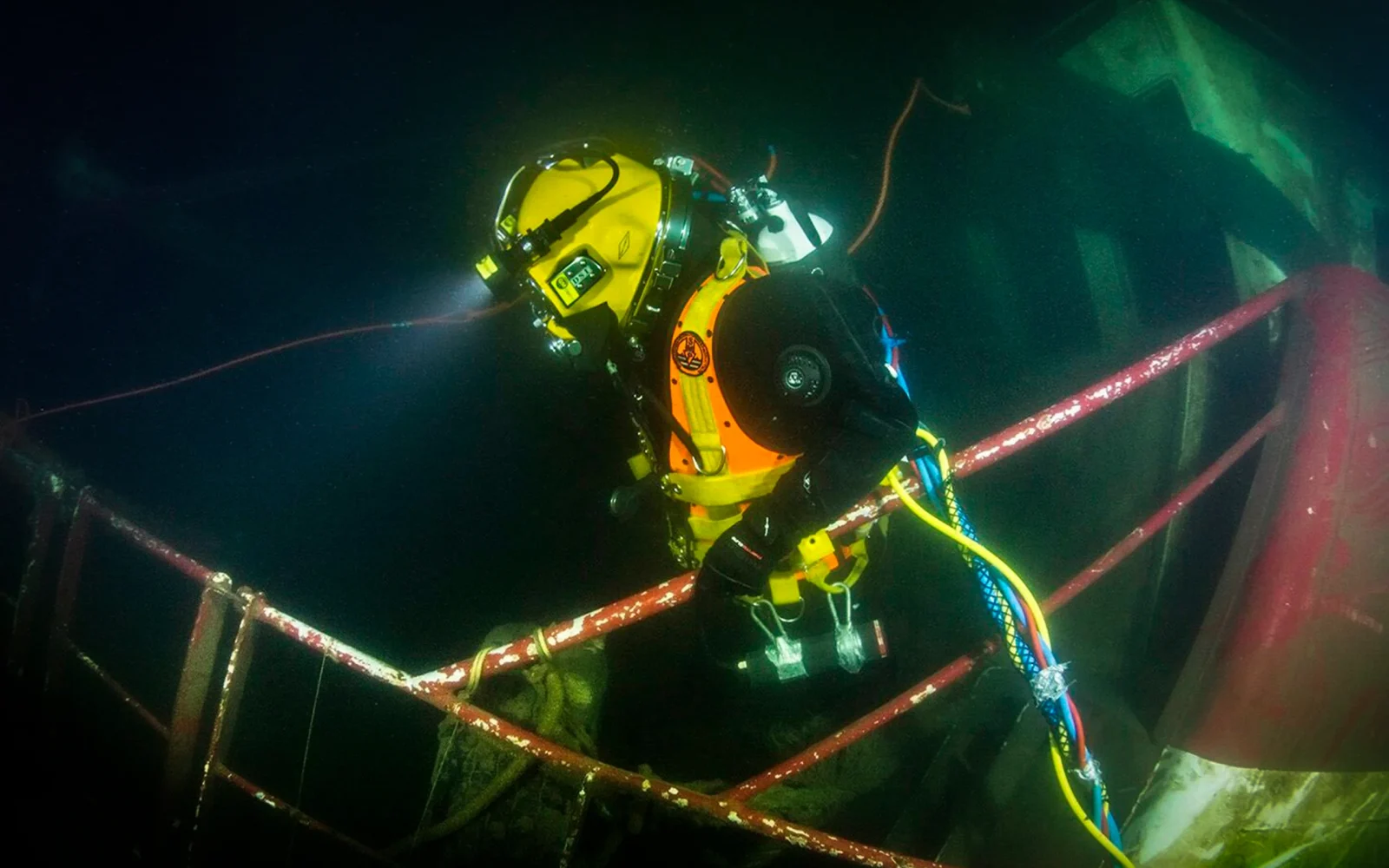
The process begins with a detailed analysis of the situation. Divers and ROVs carry out an underwater survey to determine the vessel’s position, the water conditions, any visible damage and the risks present.
They assess the stability, accessibility and any obstacles around the vessel. This assessment forms the basis for the approach. Without a thorough inspection, safe salvage is impossible.
2. Stabilising the ship
Before salvage operations can begin, the vessel must first be stabilised. This prevents it from moving unexpectedly, capsizing or sinking any further.
Divers secure the vessel to existing structures or install temporary supports. Sometimes additional buoyancy is added to bring the situation fully under control.
The salvage operation can only proceed safely once the vessel is stable.
3. Pumping out water or sealing off compartments
Where possible, compartments are made watertight so that they can be pumped out. Removing water allows the ship to gradually regain buoyancy.
If the damage is too severe or the design is unsuitable, the ship is hoisted using lifting slings, lift bags or cranes.
4. Fitting lifting points or buoyancy elements
When lifting is required, the salvage inspector determines where safe lifting points should be positioned. This ensures that the vessel is loaded evenly during lifting and does not sustain any further damage.
Divers attach lifting slings, chains or air cushions to the designated points. Precision is essential at this stage.
5. Controlled lifting of the ship
Once everything is ready, the lifting process begins. This is done slowly and step by step. Divers do not usually remain with the load during lifting, as this can be dangerous/ The behaviour of a ship as it becomes detached from the bed is never entirely predictable.
Instead, ROVs and measuring equipment are used to check that the ship is rising evenly, is not snagging on anything and is not under any unexpected strain.
Once the situation is safe, divers can carry out interim inspections. This allows the ship to be hoisted in a controlled and safe manner.
6. Relocating and securing
Once the vessel has regained sufficient buoyancy or has been fully lifted, it is moved to a safe location.
There, it is inspected again, dewatered and stabilised. At that point, repairs, transport or dismantling can take place.
The salvage operation is complete once all risks have been eliminated and the navigation area can once again be used safely.
Role of divers during ship salvage
Divers play a key role in the salvage process. They carry out the underwater inspection, stabilise the vessel, install lifting points and monitor critical stages throughout the operation.
They identify risks, provide instructions, and communicate continuously with the team above water. Without their efforts, a controlled ship salvage operation would be impossible.
A safe and controlled salvage process
Ship salvage is meticulous and technically demanding work where preparation and craftsmanship are essential. By carrying out each step with precision and closely monitoring the vessel underwater, a vessel can be salvaged without causing further damage.
With a clear step-by-step plan for ship salvage and deployment of divers, ROVs and experienced salvage specialists, the navigation area can be made safe and accessible again in a short time.
Want to know more? Curious about how we would approach your project? Go to salvage for more information.

Qceas
Rijbosch 13
4112 MB Beusichem (NL)


