
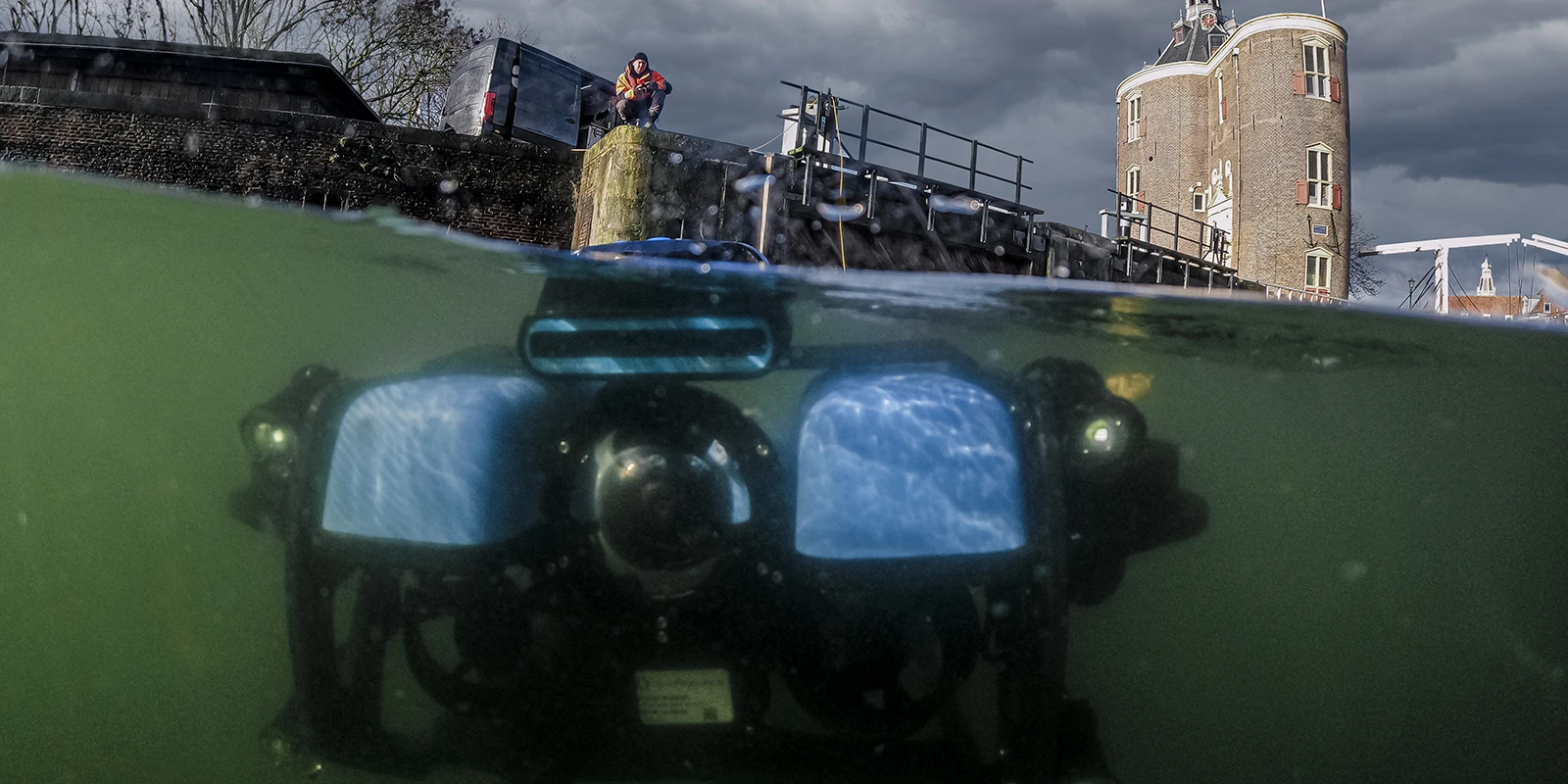
Underwater drones (ROVs) are playing an increasingly important role in inspections and diving operations. In this blog, you can read about how they work, when they are used, and what benefits they offer for underwater projects.
What is an underwater drone (ROV)?
An underwater drone, or ROV (Remotely Operated Vehicle), is a vehicle controlled through remote technology that is used for underwater inspections. Thanks to cameras, multibeam systems, sonar and additional sensors, ROVs capture accurate images of underwater objects and areas.
They are used when a location is too deep, too risky or too difficult for divers to reach. ROVs provide real-time images and data, giving project teams immediate insight into a situation.
When are ROVs used?
ROVs are primarily used when visibility is poor, with significant depths, or when objects are difficult to reach. They can remain in the same spot for extended periods of time, manoeuvre with great precision and capture details that divers are sometimes unable to see.
They also make it possible to explore an area in advance. This ensures that divers know exactly what to expect and what risks are present. It improves safety, saves time, and prevents any unnecessary dive time.
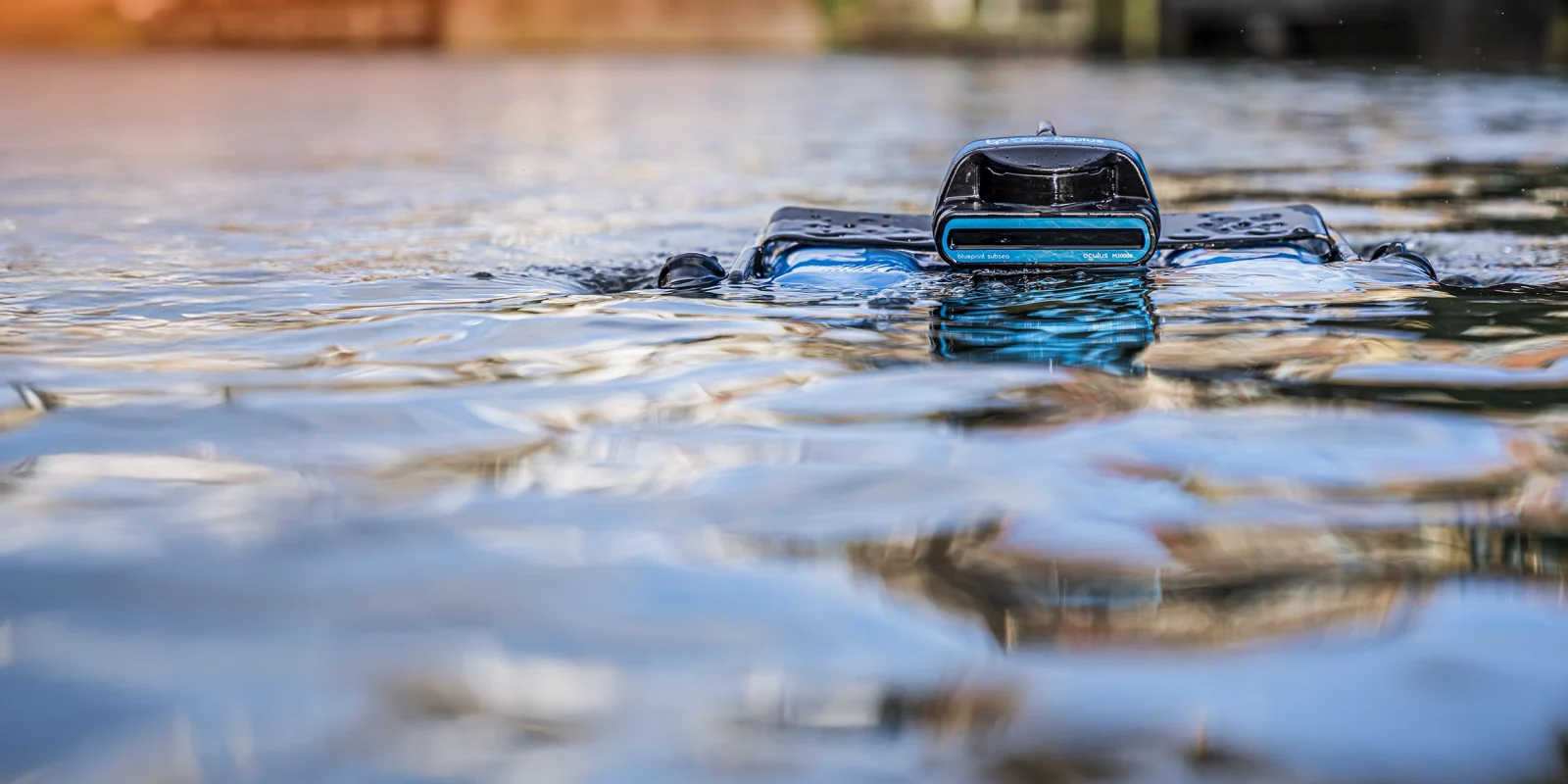
Applications for underwater drones
ROVs are widely used in civil engineering operations, as well as in maritime and industrial settings. Some of their applications include:
• ROVs are widely used in civil engineering operations, as well as in maritime and industrial settings. Some of their applications include:
• Pre-dive reconnaissance work
• Collecting bed samples for analysis
• Detecting objects across large areas using sonar
• Inspecting foundations and dredging projects
• Ship surveys and inspections of cooling water inlets
• Monitoring flow, sedimentation and damage patterns
Modern ROVs can also be equipped with additional tools such as a sediment grabs for collecting bed samples and an ultrasonic thickness gauge for material analysis.
How does an ROV work in practice?
An ROV is operated from the shore, a pontoon or a workboat. The operator receives live footage from cameras and sonar via a tethered cable, while the same cable supplies the drone with power and data connectivity. This allows the ROV to operate for extended periods.
The operator navigates the ROV to the desired location and can immediately see what is happening underwater. Thanks to sonar, the ROV can operate effectively even in conditions with very poor visibility.
Some drones have additional features, such as grippers for moving small objects, removing obstacles or collecting material samples. This enables them to work in confined spaces that divers cannot access.
ROVs as support for divers
ROVs do not replace divers, they enhance their work. The drone can scan in advance to identify where the risks lie, what tools are required and how a situation is structured.
In unfamiliar waters, an ROV inspection can even be included in the LMRA (Last-Minute Risk Analysis) before divers enter the water. This allows hazards to be identified at an early stage.
During diving operations, the drone can hover above or alongside the work area to maintain an overview or carry out follow-up inspections. This increases safety and ensures continuous insight into the situation.
Key benefits of ROV inspections
Modern ROVs are becoming increasingly sophisticated and offer clear advantages:
• Quick insight into unfamiliar terrain using sonar maps
• Tireless operation: working hours remain fully productive
• Safety: high-risk areas are first surveyed by a drone
• Fast inspections and reduced dive time
• Operations remain unaffected by polluted waters or limited visibility
• Potential cost savings due to fewer dive hours
• Access to places that divers cannot reach
ROVs manoeuvre close to structures, beneath floating objects and inside confined spaces. This makes them flexible and exceptionally valuable in a wide range of projects.
Preparing for work using an ROVV
Many projects begin with an ROV inspection. The drone maps a number of aspects including depth, currents, damage, objects and obstacles. This information acts as the foundation for a targeted and safe dive plan.
Having a complete picture in advance allows divers to work more efficiently and avoid unnecessary risks. That is why, in many projects, an ROV is deployed first, followed by diving operations where necessary.
Underwater drones in civil engineering
In hydraulic engineering, ROVs are used for inspecting quay walls, locks, bridge piers, underwater concrete and other structures.
They also offer advantages in industrial environments, such as cooling water inlets, water treatment facilities or large reservoirs. They can often be deployed without having to shut down installations, saving both time and money.
They also offer advantages in industrial environments, such as cooling water inlets, water treatment facilities or large reservoirs. They can often be deployed without having to shut down installations, saving both time and money.
Reliable support for diving operations
Underwater drones have become an integral part of modern inspections and diving projects. They enhance safety, accelerate workflows, and provide a comprehensive picture of underwater conditions.
By combining drones and divers intelligently, we can develop an approach that is both efficient and reliable. In other words, an ROV is not a replacement, but an essential partner in professional underwater work.
Want to know more?
Would you like to use underwater drones for your project? Go to ROV for more information.

Qceas
Rijbosch 13
4112 MB Beusichem (NL)


