
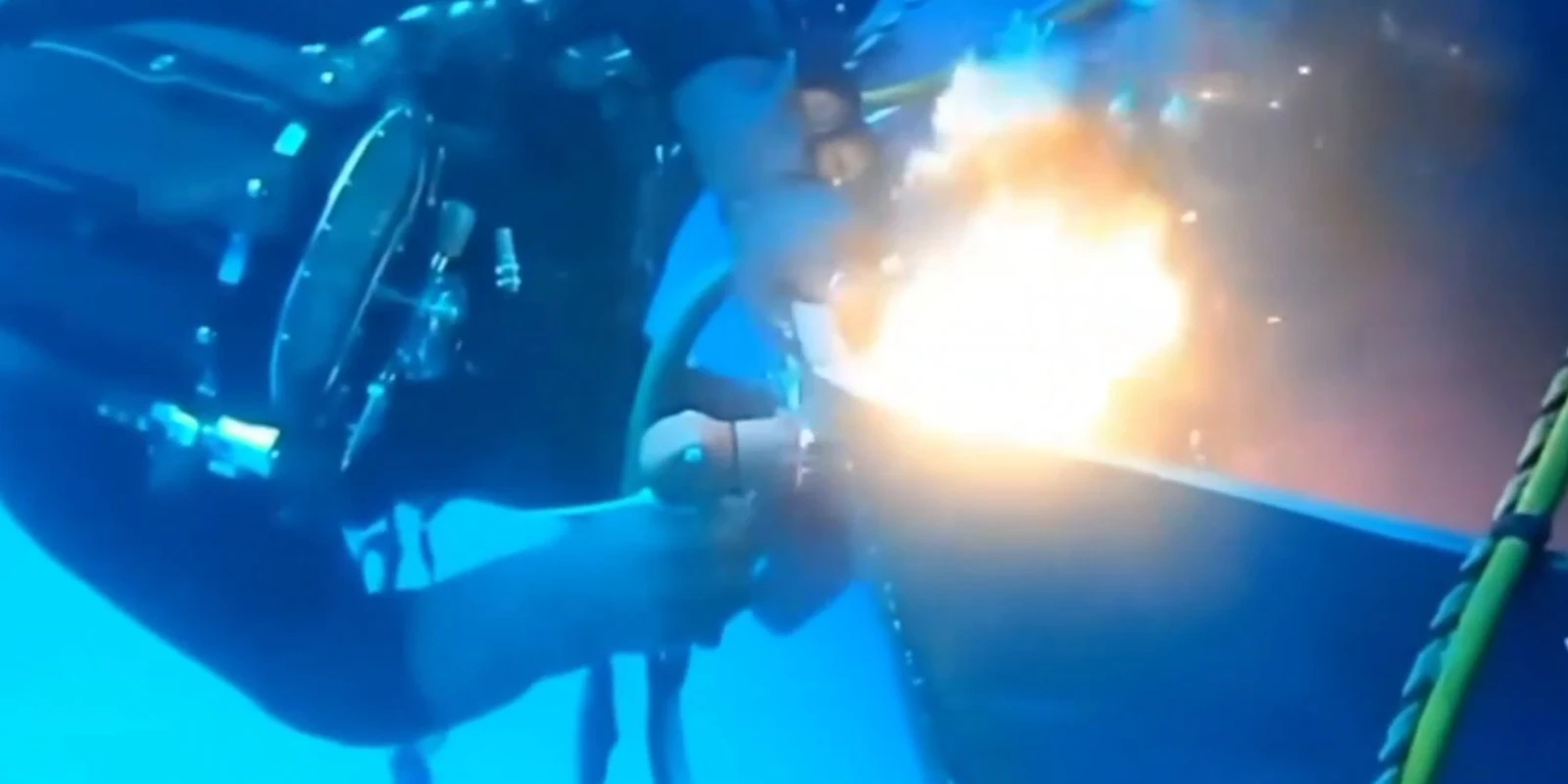
A thermal lance is a powerful tool for underwater cutting operations. In this blog, you can read about how these lances work, when divers use them and the safety precautions involved.
What is a thermal lance?
A thermal lance is a cutting tool that reaches extremely high temperatures by forcing oxygen through a metal tube containing combustible rods. The rod is ignited and then burns at thousands of degrees Celsius, causing the material to melt almost instantly, even while underwater.
The rods are usually made of magnesium, which burns brightly and consistently. This allows the lance to make controlled ‘cuts’ through hard materials. Divers use thermal lances to remove metal objects, cut holes for feed-throughs (for example, in walls) or cut open structures for repair, salvaging or civil engineering work.
Why use a thermal lance underwater?
Underwater, visibility is limited, and divers often have very little room to manoeuvre. The thermal lance is specifically designed to work effectively in those conditions.
Thanks to its extreme heat, the lance can burn through steel, anchors and other hard materials without the need for large machinery. This makes the tool ideal for removing obstructions, loosening jammed components and accessing areas where further work is required.
How does a thermal lance work?
A thermal lance consists of a metal tube filled with combustible rods. Thanks to the supply of oxygen, the lance can continue to burn underwater, and the oxygen ensures that the molten metal is blown away immediately.
A spark from a welding transformer ignites the rod, creating a point of combustion hot enough to melt hard materials almost instantly. This combination of combustible rods and oxygen makes the thermal lance a powerful, stable and reliable tool in any conditions.
Using a thermal lance underwater
Underwater, the diver carefully guides the lance along the cutting line. The constant supply of oxygen maintains the heat, meaning that it operates in much the same way as it would above water.
However, underwater cutting operations requires greater skill. The cutting point is more difficult to judge due to bubbles, slag and, at times, limited space. Because divers work very close to the cutting point, stability, situational awareness and good communication with the team above water are essential.
Underwater applications of the thermal lance
The thermal lance is used for a wide range of tasks, such as:
- Cutting through or removing hard components such as steel structures or obstructions
- Unblocking deformed or jammed components that must first be cleared before further work can be carried out
- In addition, the lance is used in salvage operations, civil and hydraulic engineering works, and for creating access points for inspections or repairs.
Working with a thermal lance requires a great deal of experience and precision. Divers must be able to assess how the material reacts, when the cutting path needs adjustment, and how stress develops within the material.
They are constantly monitoring changes in visibility, water flow and safety. Throughout the process, they maintain contact with the team above water, who monitor the operation, provide support and intervene when necessary.
The thermal lance is a powerful tool, but its precision and safety depend on the diver operating it.
Safety and preparations
Before use, the work area is checked for obstacles, instability and potential gas formation. The oxygen supply is tested and secured in accordance with established protocols.
Divers working with a thermal lance are receive specialised training in using this tool safely in conditions with poor visibility, currents or confined spaces. Thorough preparation and constant communication are essential for carrying out the work efficiently and safely.
An indispensable tool for underwater welding
The thermal lance is a versatile and powerful tool for underwater work. It is used in salvage, repairs and civil engineering projects, making it possible to work on materials that would otherwise be inaccessible or impossible to remove.
Through skill, experience and strong coordination within the team, the thermal lance offers a reliable method for cutting through heavy structures underwater.
Would you like to use a thermal lance for your project? Contact us for more information.

Qceas
Rijbosch 13
4112 MB Beusichem (NL)


