
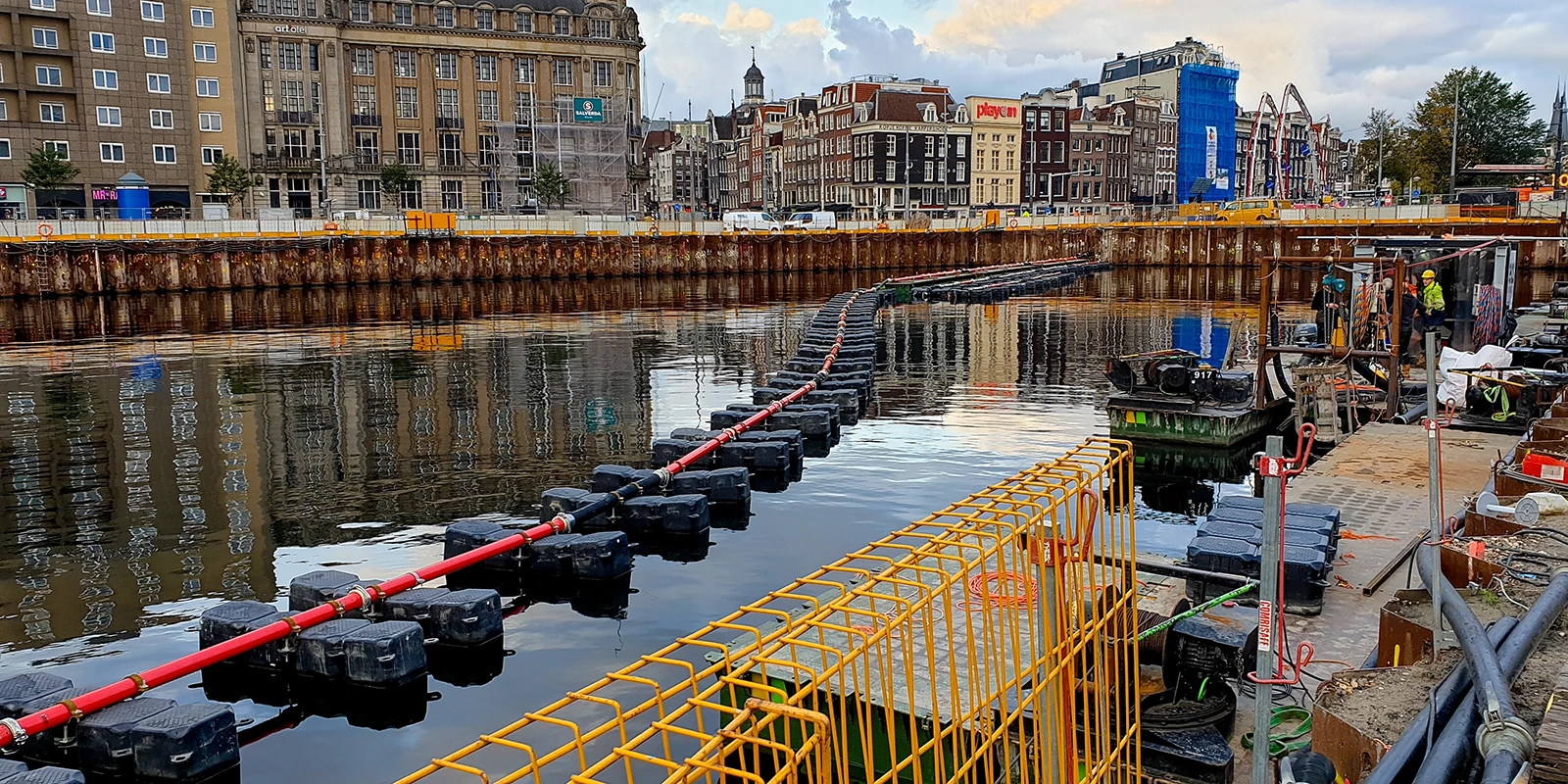
A construction pit makes it possible to work safely below ground level. In this blog, you can read why a cofferdam is needed and what role divers play in its construction.
What is a construction pit?
A construction pit is a temporarily enclosed work area below ground level. The construction pit creates a safe environment for constructing foundations, basements, tunnels or lock elements. The walls of the construction pit keep the surrounding water out. In areas with a high groundwater table or where construction takes place below ground level, a construction pit is vital. Without this structure, water would constantly flow in, making work unsafe or even impossible.
Why is a construction pit necessary?
A construction pit prevents water pressure, water flow and saturated soil from affecting the work. By sealing off the space and pumping it dry in a controlled manner, a stable construction environment is created.
This is crucial for projects such as basement construction, tunnel works, bridges, flood defences or works in urban areas.
How is a construction pit constructed?
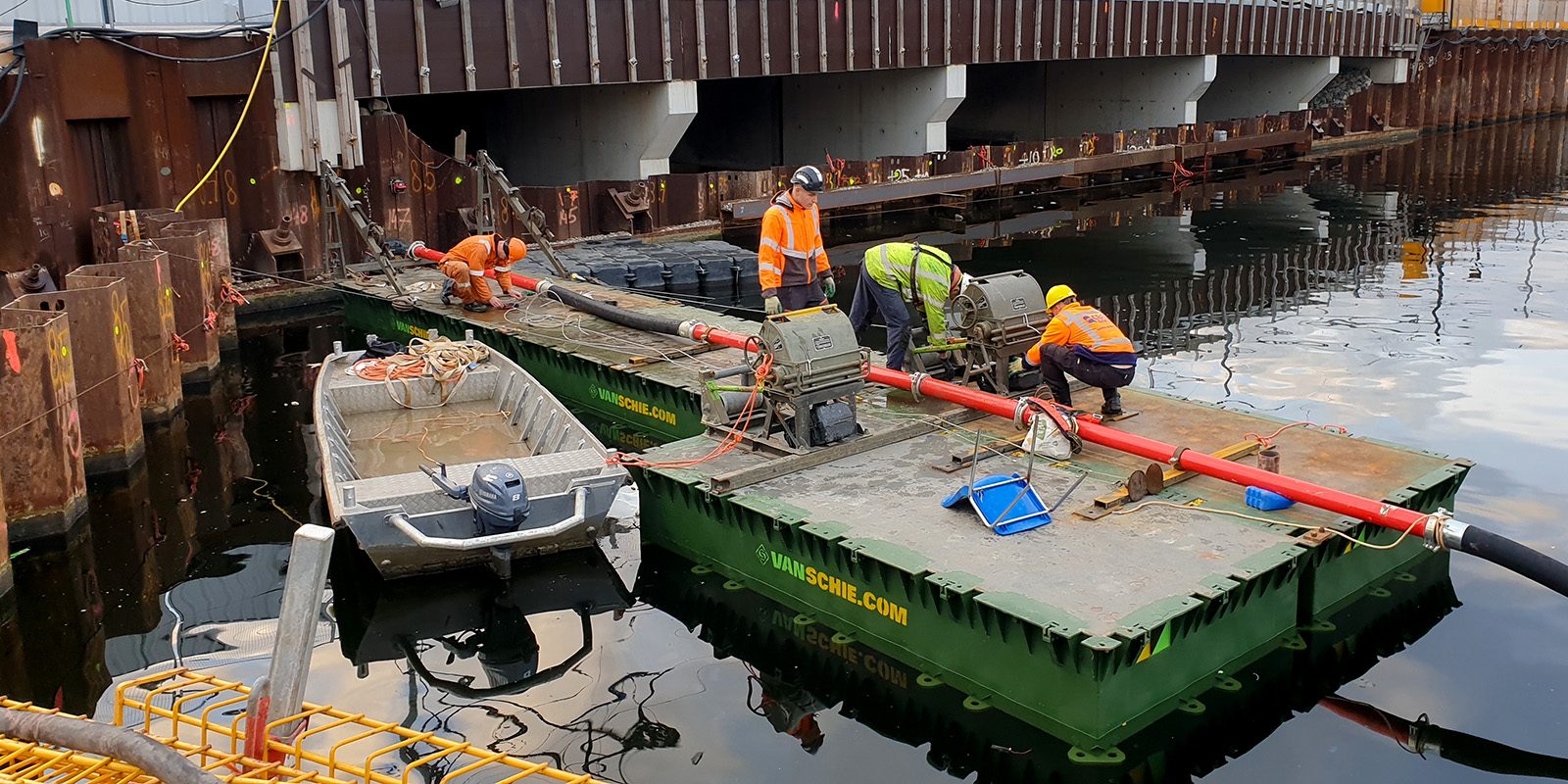
Building a construction pit takes place in several stages. First, walls are installed that completely enclose the workspace. These structures must be strong enough to withstand water pressure and soil forces.
The construction pit is then excavated to the required depth. Only once the excavation is complete and the target depth has been reached do divers come into play for the preparatory work.
The bed and walls are then inspected and prepared. This is often carried out (partially) underwater. Divers inspect the joints, assess the condition of the subsoil and, where necessary, install anchors or temporary supports. They check whether the bed is suitable for underwater concrete, foundations or subsequent work.
Role of divers in a construction pit
Divers play a key role in both preparing and executing the work. They inspect the walls, ensure that joints are secure and assess the subsoil for levelness and stability.
They also remove obstacles, silt and other material that could interfere with the work. In addition, divers install structures such as reinforcement meshes or tremie screens where necessary in preparation for the next work phase. Their measurements and inspections largely determine the accuracy, stability and safety of the project as it progresses.
Underwater concrete and construction pits
In many construction pits, a submerged concrete slab is poured first. This slab forms a watertight base that can later be pumped dry.
Divers are vital in this phase as well: they inspect the gravel layer, guide the concrete pump during the pour and monitor the rising concrete. Only once the slab has set can the water be pumped out and the above-ground construction process begin.
Safety and stability of the construction pit
Stability is crucial. The walls must be able to withstand considerable forces, and the subsoil must be able to bear the load of the structure. Divers regularly inspect the construction pit for leaks, abnormalities or subsidence.
These inspections, combined with precise measurements, ensure that the construction pit remains safe throughout the entire project. By identifying any irregularities early, risks are reduced and delays are prevented.
An essential part of civil and hydraulic engineering
The construction pit is a vital foundation for many civil and hydraulic engineering projects. By creating a safe, controlled workspace, complex operations can be carried out below ground level.
With the expertise of divers and meticulous construction techniques, each phase is carried out with careful precision. This makes the construction pit an essential tool in modern civil engineering projects.
Want to know more?
Would you like to use a construction pit for your civil engineering project? Go to for more information.

Qceas
Rijbosch 13
4112 MB Beusichem (NL)


